
Surgical mask on flu patients can reduce spread of infectious virus

UMD study provides new clues to how flu virus spreads — Shows that using a surgical mask on flu patients can reduce the release of even the smallest droplets containing infectious virus – People may more likely be exposed to the flu through airborne virus than previously thought, according to new research from the University of Maryland School of Public Health. The study also found that when flu patients wear a surgical mask, the release of virus in even the smallest airborne droplets can be significantly reduced.

Bed nets use could eradicate malaria

Net advantage — Study finds use of bed nets by 75 percent of population could eradicate malaria – Malaria, the leading cause of death among children in Africa, could be eliminated if three-fourths of the population used insecticide-treated bed nets, according to a new study from the National Institute for Mathematical and Biological Synthesis (NIMBioS).

Bee venom nanoparticles may destroy HIV

Bee venom nanoparticles may destroy HIV

Nanoparticles loaded with bee venom kill HIV
– Nanoparticles carrying a toxin found in bee venom can destroy human immunodeficiency virus (HIV) while leaving surrounding cells unharmed, researchers at Washington University School of Medicine in St. Louis have shown. The finding is an important step toward developing a vaginal gel that may prevent the spread of HIV, the virus that causes AIDS.

HIV infected child appears to have been cured of HIV infection

Toddler ‘functionally cured’ of HIV infection, NIH-supported investigators report — Discovery provides clues for potentially eliminating HIV infection in other children – This is the first well-documented case of an HIV-infected child who appears to have been functionally cured of HIV infection. A two-year-old child born with HIV infection and treated with antiretroviral drugs beginning in the first days of life no longer has detectable levels of virus using conventional testing despite not taking HIV medication for 10 months.

Cesarean delivery rates varied tenfold in US hospitals

U of M researchers find wide variation in cesarean delivery rates among US hospitals – Cesarean delivery is the most common surgery in the United States, performed on 1.67 million American women annually. The latest study, appearing in Health Affairs, shows that cesarean delivery rates varied tenfold across U.S. hospitals, from 7.1 percent to 69.9 percent.

Option B+ prevents mother to child transmission of HIV

Innovative policy to prevent mother-to-child transmission of HIV shows positive impact — New approach in Malawi dramatically increases the number of mothers on treatment – The number of pregnant and breastfeeding women in Malawi with HIV who started life-saving antiretroviral treatment increased by more than 700 percent in one year. The new treatment option, called Option B+, offers all pregnant or breastfeeding women infected with HIV lifelong antiretroviral treatment (ART), regardless of the stage of their HIV infection.

Natrelle 410 silicone gel breast implants approved in US

FDA approves new silicone gel-filled breast implant — Agency requires post-approval safety studies to assess rare events – The U.S. Food and Drug Administration approved the Natrelle 410 Highly Cohesive Anatomically Shaped Silicone-Gel Filled Breast Implant to increase breast size (augmentation) in women at least 22 years old and to rebuild breast tissue (reconstruction) in women of any age. Natrelle 410 implants are manufactured by Allergan, Inc.

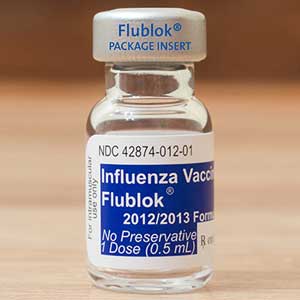
Flublok seasonal influenza vaccine approved in US

Flublok seasonal influenza vaccine approved in US

US FDA approves new seasonal influenza vaccine made using novel technology – The U.S. Food and Drug Administration announced that it has approved Flublok, the first trivalent influenza vaccine made using an insect virus (baculovirus) expression system and recombinant DNA technology. Flublok is approved for the prevention of seasonal influenza in people 18 through 49 years of age.

Sirturo – first drug to treat multi drug resistant tuberculosis

FDA approves first drug to treat multi-drug resistant tuberculosis – The U.S. Food and Drug Administration approved Sirturo (bedaquiline) as part of combination therapy to treat adults with multi-drug resistant pulmonary tuberculosis (TB) when other alternatives are not available.

Fulyzaq – first anti diarrheal drug for HIV AIDS patients

FDA approves first anti-diarrheal drug for HIV/AIDS patients — Fulyzaq is the second botanical drug approved by the agency – The U.S. Food and Drug Administration approved Fulyzaq (crofelemer) to relieve symptoms of diarrhea in HIV/AIDS patients taking antiretroviral therapy, a combination of medicines used to treat HIV infection.

Sustained action needed for Getting to Zero HIV

Sustained action needed for ?Getting to Zero? — Zero New Infections, Zero AIDS-related deaths & Zero discrimination – India is on track to achieve the global targets of ?Zero New Infections, Zero AIDS-related deaths & Zero discrimination?. However, sustaining prevention focus and intensity in the areas where significant declines have been achieved, is highly critical to consolidate the gains, while effectively addressing the emerging epidemics.

HIV infected young Americans unaware about HIV status

More than half of young HIV-infected Americans are not aware of their status — Too many young people continue to become infected and few are tested for HIV – Young Americans between the ages of 13 and 24 represent more than a quarter of new HIV infections each year (26 percent) and most of these youth living with HIV (60 percent) are unaware they are infected. The most-affected young people are young gay and bisexual men and African-Americans.

Dr. Anil Singhal Homeopathic Doctor | Dr. Anil Singhal's Blog | Manan - My Memoir by Dr. Anil Singhal | Boger's Legacy | Organon of Medicine | SpiritIndia