
Obesity linked to ovarian cancer risk

Study links obese women are at an increased risk of developing ovarian cancer compared with women of normal weight. – A new epidemiological study has found that among women who have never used menopausal hormone therapy, obese women are at an increased risk of developing ovarian cancer compared with women of normal weight.
New genes identified linked to lung cancer

Scientists find new genes linked to lung cancer. Discovery opens door to individualized treatment strategies. – Working as part of a multi-institutional collaboration, scientists at Washington University School of Medicine in St. Louis have assembled the most complete catalog to date of the genetic changes underlying the most common form of lung cancer.

Researchers identify protein that fuels ovarian cancer

Researchers identify protein that fuels ovarian cancer, but its production can be stifled by a tiny bit of RNA wrapped in a fatty nanoparticle. – A protein that stimulates blood vessel growth worsens ovarian cancer, but its production can be stifled by a tiny bit of RNA wrapped in a fatty nanoparticle, a research team led by scientists at The University of Texas M. D. Anderson Cancer Center reports in the Journal of the National Cancer Institute.

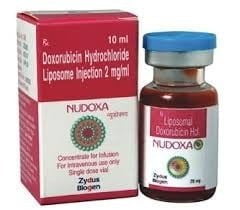
Zydus Cadila introduces Nudoxa cancer drug

Zydus Cadila introduces Nudoxa cancer drug

Zydus Cadila has introduced Nudoxa for the treatment of various cancers. One of the critical drugs used in chemotherapy, Nudoxa heralds a new approach in cancer therapy. – Zydus Cadila has introduced an NDDS product ‘Nudoxa’ for the treatment of various cancers. One of the critical drugs used in chemotherapy, Nudoxa heralds a new approach in cancer therapy.

Oral contraceptive pills can protect against ovarian cancer

The longer a woman uses the oral contraceptive pill, the lower her risk of getting ovarian cancer later in life. Oral contraceptives give substantial long-term protection against ovarian cancer. – Use of oral contraceptives during a woman’s life-time gives substantial long-term protection against ovarian cancer and the longer they are used, the greater the reduction in risk. These are the conclusions of authors of an Article in this week’s edition of The Lancet – a medical journal in the United Kingdom.

Breast cancer gene mutation common in Hispanic, young black women

The gene mutation BRCA1, which is known to increase the risk of breast cancer, is prevalent among Hispanics and young black women with breast cancer, researchers report. – A genetic mutation already known to be more common in Ashkenazi Jewish breast cancer patients is also prevalent in Hispanic and young African-American women with breast cancer, according to one of the largest, multiracial studies of the mutation to date.

Dr. Anil Singhal Homeopathic Doctor | Dr. Anil Singhal's Blog | Manan - My Memoir by Dr. Anil Singhal | Boger's Legacy | Organon of Medicine | SpiritIndia