
Aspirin resistance increases heart attack, stroke risk

Increased risk of heart attack or stroke for patients who are resistant to aspirin — Aspirin ‘resistance’ and risk of cardiovascular morbidity : Systematic review and meta-analysis – Being resistant to aspirin makes patients four times more likely to suffer a heart attack, stroke or even die from a pre-existing heart condition, according to a study published in British Medical Journal, UK. The study relates to patients who are prescribed aspirin long term as a way of preventing clots from forming in the blood.
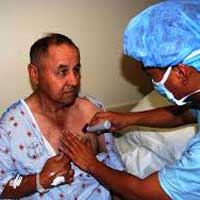
Immune system can help heal patients with heart failure

Immune system can help heal patients with heart failure

The ability to change or modulate the patient?s immune response has now been shown to be attainable as well as successful in treating certain stages of heart failure. – Modifying the immune system of a patient with heart failure reduces the patient’s risk of death and the need for hospitalization, according to research published in recent edition of The Lancet.

Calcium supplements may increase heart attacks in postmenopausal women

Calcium supplements or high calcium intakes may increase heart attacks in postmenopausal women, increased risk of myocardial infarction outweighs the reduction in fractures in older women. – Calcium is an important component of bone, and a sufficient intake of calcium is needed for bone homoeostasis. Calcium supplements can reduce the risk of fractures in elderly women, but high calcium intakes or calcium supplements may increase the risk of heart attack in healthy postmenopausal women.

Vitamin D deficiency may increase heart disease risk

Vitamin D deficiency is associated with incident cardiovascular disease. Further clinical and experimental studies may be warranted to determine whether correction of vitamin D deficiency could contribute to the prevention of cardiovascular disease. – The same vitamin D deficiency that can result in weak bones now has been associated with an increased risk of cardiovascular disease, Framingham Heart Study researchers report in Circulation: Journal of the American Heart Association.

More teen women battling heart disease

At the age of 18, most young women are embarking on adulthood without a care in the world?health included. But experts at UC say that shouldn?t always be the case. – University of Cincinnati UC experts urge women to watch for warning signs associated with heart disease, a condition that is becoming more common, especially among women.

Stress may condition heart to survive heart attack

University of Cincinnati researchers reveal that people who experience brief periods of blocked blood flow may be better conditioned to survive a full-blown heart attack later. – People who experience brief periods of blocked blood flow may be better conditioned to survive a full-blown heart attack later, according to new research from the University of Cincinnati (UC).

Chest pain – common sign of heart attack for women

Several recent reports have found that women are more likely to have other symptoms of a heart attack but chest pain is the most common sign of heart attack for most women. – Chest pain or discomfort has long been regarded as the most common early warning sign of a heart attack for both men and women. However, several recent reports have found that women are more likely to have other symptoms of a heart attack. A new study looked at the available evidence and concluded that chest pain is the most common sign of heart attack for most women.

Gene changes may lead to hardening of arteries, atherosclerosis

A genetic mutation expands lesions in the aorta and promotes coronary atherosclerosis, more commonly known as hardening of the arteries, according to a study by Yale School of Medicine in Cell Metabolism. – Researchers revealed that changes in gene may lead to hardening of the arteries and expands lesions in the aorta and promotes coronary atherosclerosis. The study was done by researchers from Yale School of Medicine and published in Cell Metabolism.

Living embryonic heart cells prevent cardiac arrhythmias

Researchers implant embryonic cells into damaged hearts and prevent life-threatening heart arrhythmias.
– When researchers at Cornell, the University of Bonn and the University of Pittsburgh transplanted living embryonic heart cells into cardiac tissue of mice that had suffered heart attacks, the mice became resistant to cardiac arrhythmias, thereby avoiding one of the most dangerous and fatal consequences of heart attacks.

Nexavar approved for patients with inoperable liver cancer

Anticancer drug Nexavar raised survival period in inoperable hepatocellular carcinoma patients suffering from this kind of liver cancer. – The U.S. Food and Drug Administration has approved Nexavar (sorafenib) for use in patients with a form of liver cancer known as hepatocellular carcinoma, when the cancer is inoperable. Nexavar was originally approved in 2005 for the treatment of patients with advanced renal cell carcinoma, a form of kidney cancer.

Dr. Anil Singhal Homeopathic Doctor | Dr. Anil Singhal's Blog | Manan - My Memoir by Dr. Anil Singhal | Boger's Legacy | Organon of Medicine | SpiritIndia