
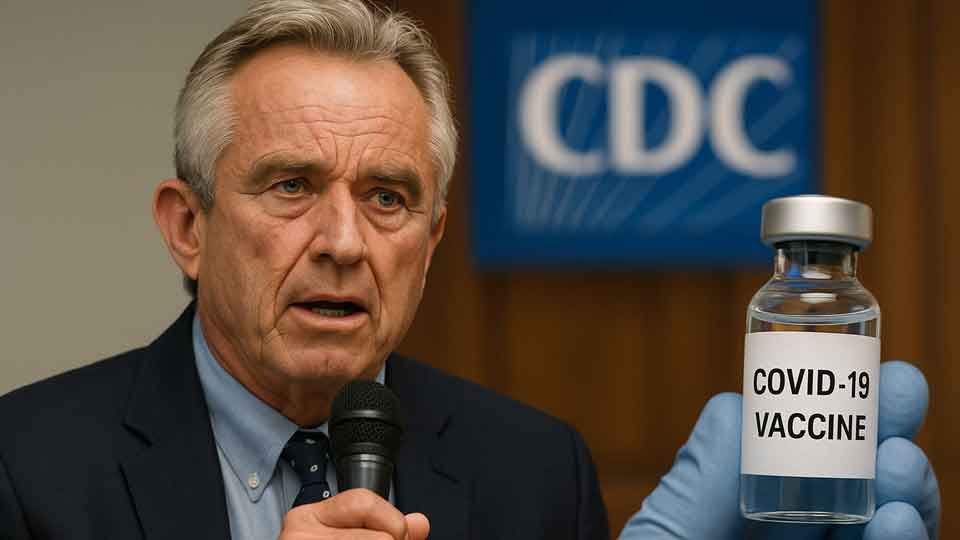
A new wave of controversy surrounding COVID-19 vaccines has erupted following pointed remarks by presidential candidate Robert F. Kennedy Jr. His statements criticizing the Centers for Disease Control and Prevention (CDC) have triggered a fierce public and political response, reigniting debates about vaccine safety, transparency in public health policies, and government trust.
At the heart of the current dispute is Kennedy’s assertion that COVID-19 vaccine guidance—especially for children—has been inadequately scrutinized and lacks transparency. He claimed that certain recommendations are politically motivated rather than science-based, a statement that quickly drew criticism from health officials and medical experts. In response, CDC representatives have doubled down on their existing vaccine recommendations, emphasizing that decisions are driven by rigorous data from clinical trials, global health surveillance, and peer-reviewed evidence.
One of the more contentious issues revolves around updated CDC guidelines on booster shots for children. As new variants of the virus continue to evolve, the CDC has recommended booster doses for eligible age groups, including young children, to maintain immunity. Critics, however, including Kennedy, argue that the long-term safety data on pediatric vaccinations is limited and that parents should be cautious. This viewpoint has gained traction in certain circles, especially among vaccine-skeptical groups.
Health authorities and pediatric associations, meanwhile, continue to defend the science behind the guidance. They stress that the risks posed by COVID-19—especially in vulnerable populations—outweigh the minimal risks of vaccination. Studies show that vaccinated children are far less likely to suffer from severe illness, long COVID, or hospitalization, especially during waves dominated by highly transmissible variants.
The controversy has also become deeply political. Kennedy, who is running as an independent in the 2024 presidential race, has made vaccine skepticism a prominent part of his campaign. While some applaud his calls for accountability and reform within public health institutions, others see his rhetoric as dangerously undermining public trust in science during an ongoing pandemic.
His public feud with CDC officials escalated after recent hearings where heated exchanges took place over the agency’s decision-making process. Critics accused the CDC of “moving the goalposts” with changing guidelines, while defenders argued that evolving recommendations reflect the dynamic nature of the virus and emerging research findings.
In the broader landscape, this debate echoes earlier phases of the pandemic, when shifting mask mandates and vaccine rollout strategies were met with both public confusion and resistance. Health communication experts emphasize that while transparency and feedback are crucial, undermining foundational science can erode public confidence at a time when vigilance is still essential.
Educationally, it’s important to clarify how vaccines are developed and approved. COVID-19 vaccines underwent large-scale clinical trials before receiving emergency use authorization, and most have now gained full FDA approval. The development process, although expedited, did not bypass standard safety protocols. Surveillance systems like VAERS (Vaccine Adverse Event Reporting System) continue to monitor vaccine-related side effects, providing additional layers of oversight.
Pregnant women and immunocompromised individuals have also been the focus of vaccine guidance revisions. Recent studies have shown that COVID-19 vaccines are safe during pregnancy and may even confer protection to the newborn. Still, Kennedy and his supporters argue that more long-term data is needed, advocating for informed consent and broader data transparency.
Some pediatricians and family physicians have expressed concern over the politicization of vaccines. According to them, public debates should not overshadow the clear benefits that vaccines offer in preventing serious disease and reducing healthcare burdens. They fear that misinformation, amplified through social media, may lead to declining vaccination rates—a risk not just for COVID-19, but for other preventable diseases as well.
The CDC, in a recent public statement, reaffirmed its commitment to scientific rigor, stating, “We base our recommendations on a thorough review of all available evidence, prioritizing the safety and health of all Americans, especially children.”
As misinformation and mistrust swirl, the challenge for public health agencies is not just in delivering accurate guidance, but also in communicating it clearly and compassionately. Balancing transparency with public reassurance has become a tightrope walk, especially in a politically charged environment.
Key Insight:
The debate over COVID-19 vaccine guidance—especially in children—highlights the urgent need for transparent science communication and depoliticized public health policy to preserve trust and ensure informed decision-making.